Sprint 5 project: cold-chain logistics monitoring on AWS

Scroll or pinch to zoom, drag to move, double-click to zoom in 100% SVG PNG Back to the post
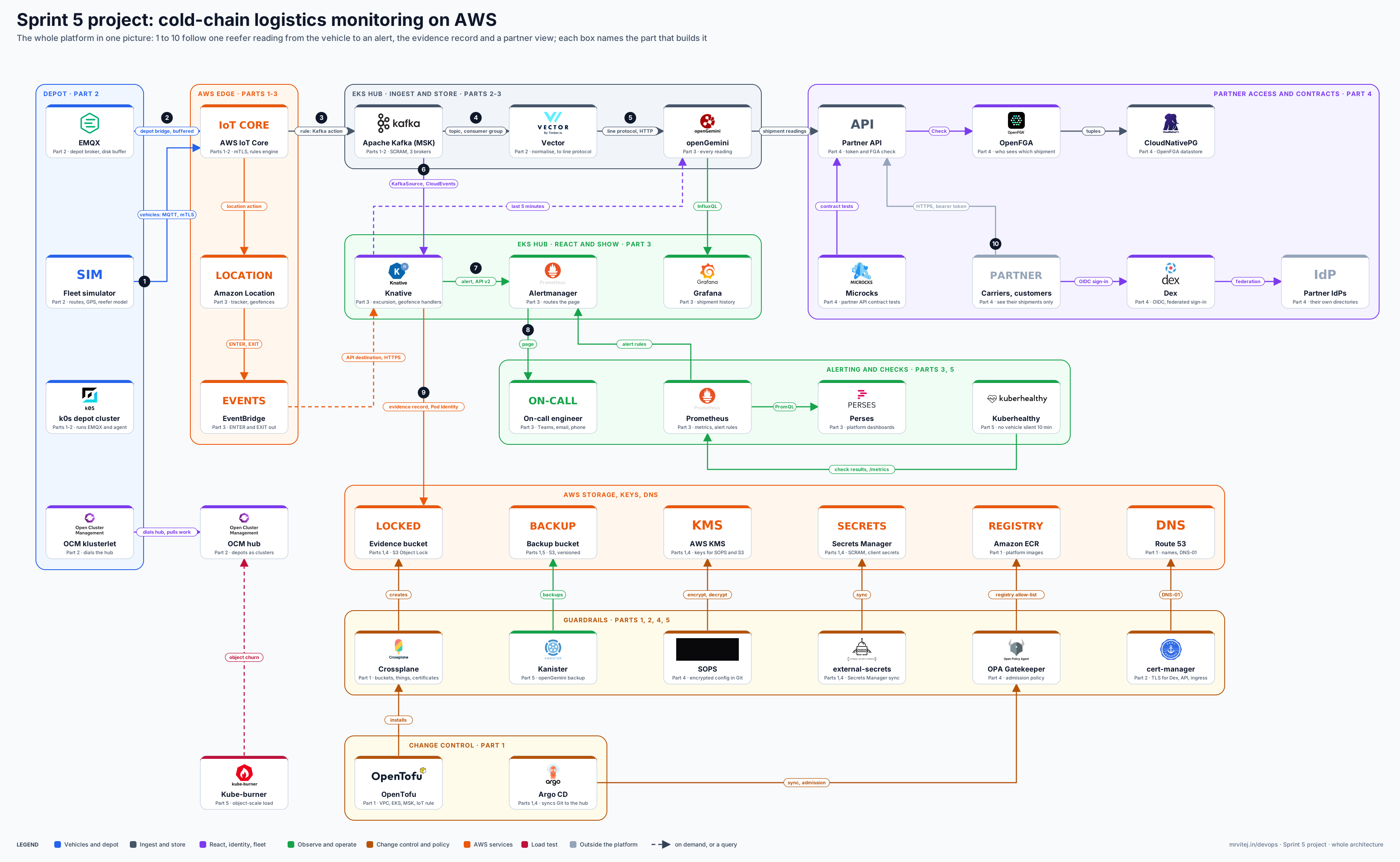
Whole Sprint 5 architecture on AWS. Vehicles and depot: a fleet simulator publishes MQTT over mutual TLS to AWS IoT Core (1); depot sensors reach an EMQX broker with a disk buffer on a k0s depot cluster, which bridges to IoT Core and keeps data during a link outage (2); an Open Cluster Management klusterlet on the depot dials the OCM hub. IoT Core rules send readings to Apache Kafka on Amazon MSK (3) and device positions to an Amazon Location tracker, whose geofence ENTER and EXIT events go through EventBridge to Knative. Vector reads the Kafka topic (4) and writes InfluxDB line protocol to openGemini (5); Grafana reads openGemini with InfluxQL. Knative reads the same topic through a KafkaSource (6), checks the last five minutes in openGemini, sends an alert to Alertmanager (7), which pages the on-call engineer (8), and writes an evidence record to an S3 Object Lock bucket (9). Partners sign in through Dex, which federates to their identity providers, and call the partner API with a bearer token (10); the API checks OpenFGA, whose tuples live in PostgreSQL run by CloudNativePG, and Microcks tests the API contract. Prometheus feeds alert rules and Perses dashboards; Kuberhealthy checks that no vehicle is silent. Guardrails and operations: Crossplane creates buckets and IoT identities, Kanister backs up openGemini to a backup bucket, SOPS encrypts configuration with AWS KMS, external-secrets syncs Secrets Manager, Gatekeeper restricts images to Amazon ECR, cert-manager uses Route 53 for DNS challenges, OpenTofu builds the foundation, Argo CD syncs Git, and Kube-burner loads the hub and depot clusters with objects.